Short answer: for real conversations in China, my pick is DeepSeek, an AI chat app. A regular translator turns words into words and often loses the meaning. DeepSeek lets you explain where you are and what you need, then writes a short, natural phrase in Chinese you can simply show. Keep Google Translate with offline Chinese as a backup and for translating menus with the camera.
Checked November 2026. Apps and features change; test everything at home before you fly.
Affiliate disclosure: this article contains affiliate links. If you buy through one of them, I earn a small commission at no extra cost to you.
Why a regular translator let me down
In Hainan we were walking back from the beach and came across a local market: boxes of mangoes, pineapples, coconuts, passion fruit, dragon fruit. No prices we could read. We pointed at the mangoes and asked the price through a translator app.
It answered with total confidence: «Three pieces of mango for each pie.» We laughed. The women at the market laughed even harder. Nobody understood the price, and we walked away with nothing.
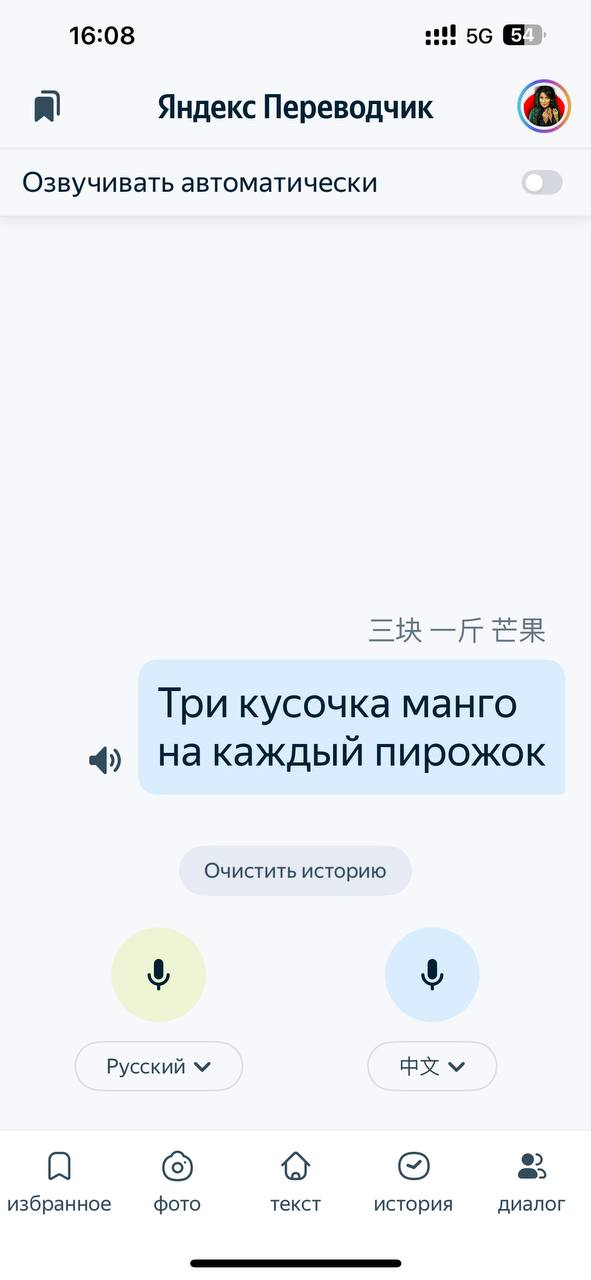
A few minutes later it clicked: 三块一斤芒果 means «3 yuan for one jin.» A jin is 500 grams, so the mangoes cost 6 yuan a kilo, under a dollar. We turned around and ran back.
Why DeepSeek works better
A regular translator only sees one sentence. With DeepSeek you can first set the scene: «I’m a tourist in China, I don’t speak Chinese, and I’m talking to a seller at a market.» Then ask it for a short, natural phrase in Chinese, in large text you can show from your screen, plus a translation back into English so you know what you’re showing.
The secret isn’t the AI itself, it’s what you tell it: your role, the situation and the format of the answer. If you tell it what you’d tell a friend, it does surprisingly well.
At the pharmacy
Asking for a medicine by its brand name from home rarely works in China, because that product often isn’t sold there. We described the symptoms to DeepSeek and asked it to write a request for the pharmacist by active ingredient. DeepSeek only helped explain the problem. The pharmacist chose the medicine, and that’s important: AI doesn’t replace a doctor or a pharmacist.
Buying a power bank
We needed a 10,000 mAh power bank. With a phrase from a regular translator, sellers tried to guess what we meant. With DeepSeek’s phrase they nodded straight away and got the right one.
How to write a translation request in DeepSeek
First describe the situation in your own words or by voice. Then ask it to:
- translate into natural Simplified Chinese;
- keep the phrase short and polite;
- put the Chinese text in a separate large block;
- give a back-translation into English;
- not add any facts you didn’t mention.
Always read the back-translation before you show the phrase. It takes five seconds and saves you from your own mango story. For prices, ask for the numbers in digits. For an address, paste the Chinese name from your booking.
Don’t trust any AI for timetables, addresses, ticket prices or rules. Check those in Trip.com, Amap or with a real person.
Google Translate: keep it as a backup
A regular translator is still useful for the camera, single words and working offline. Google Translate lets you download languages and translate with the camera. Before the trip, download English and Simplified Chinese and test it at home in airplane mode, not at the departure gate.
DeepSeek needs a stable internet connection. I used a travel eSIM, and all the apps I needed opened. See best eSIM for China.
Check the eSIM I used on Trip.com →
Three situations where you really need a translator
At a restaurant. Translate the whole menu with the camera first, then zoom in on the dish you picked: a wide shot often garbles small text. If you have an allergy, prepare the Chinese text in advance and ask the staff to confirm it, not just nod.
In a taxi. The driver needs the name and address in Chinese, not your live translation. Keep short phrases ready: «this entrance,» «stop here,» «wait two minutes.»
At hotel reception. Show your booking and passport, then show your question as a separate message: late check-in, deposit, breakfast or room type. One message, one question.
Mistakes that make translation useless
- Installing the app but forgetting to download offline languages.
- Writing one long, tangled sentence instead of two short ones.
- Not checking the back-translation.
- Trusting the translation of small numbers on a blurry photo.
- Looking up an address by its English name only.
- Treating AI as a source of current prices, timetables and rules.
More apps for the trip: China travel apps.
FAQ
What is the best translator app for China?
In my experience, DeepSeek handles context best. Keep Google Translate for the camera, single words and offline backup.
Does DeepSeek work in China?
It worked for me throughout the trip. Install it and sign in before you fly, and save your prompt in a note.
Does Google Translate work in China?
Access on local networks can differ. Download languages offline, and use a travel eSIM if you need online features.
Can I translate a menu without internet?
Yes, if your app supports offline camera translation and you downloaded the languages in advance. Test it at home in airplane mode.
Which Chinese should I choose?
Simplified Chinese for mainland China. Traditional characters are used in Hong Kong, Macau and Taiwan.
Can I trust DeepSeek when buying medicine?
Only for translating symptoms and a known active ingredient. A doctor or pharmacist must confirm the medicine and the dose.
Добавить комментарий