Рубрика: English

  • How to Book Hotels in China as a Foreigner: Rules and 7 Checks

    Short answer: book on a platform that works in English and takes foreign cards, such as Trip.com. You no longer need to look for a special hotel «licensed for foreigners»: in July 2024 China’s government said hotels and booking platforms must not turn foreign guests away for lacking that qualification. Bring your original passport, and the hotel registers your stay for you. Before paying, check the room type, the window, the walk to the metro, late check-in and the deposit.

    Checked November 2026. Booking rules depend on the platform and the rate; read the conditions of your specific room before you pay.

    Affiliate disclosure: this article contains affiliate links. If you book through one of them, I earn a small commission at no extra cost to you.

    Can foreigners stay in any hotel in China?

    A foreign passport alone is no longer a reason to refuse you. Many websites still repeat the old advice to look for a «foreign guest license.» In July 2024 the Chinese government said accommodation providers and booking platforms must not restrict foreign guests on the grounds that they lack such a qualification, or advertise that they don’t accept them. Hotels register foreign guests with a valid passport, according to the National Immigration Administration.

    That doesn’t mean a hotel must take you under any circumstances: you need a booking, a free room and your original passport, and a late arrival is best agreed in advance. If there’s a misunderstanding at the desk, show your booking and ask staff to contact the booking platform’s support.

    If you’re staying with friends or in a private apartment rather than a hotel, separate rules apply: you have to register your stay with the local police within 24 hours.

    How to book a hotel in China, step by step

    1. Choose the area and check routes to your three main sights.
    2. Filter by rating, fresh reviews and a 24-hour front desk if you arrive at night.
    3. Open the photos for your room type, not the general gallery.
    4. Check the window, size, bed, breakfast and child policy.
    5. Enter your name exactly as in your passport.
    6. Compare refundable and non-refundable rates.
    7. Ask about payment on site and the deposit.
    8. Save the confirmation, plus the hotel’s name and address in Chinese.

    Find a hotel in China on Trip.com →

    The 7 checks I make before paying

    1. The area and the real walk to the metro

    In big Chinese cities the area matters more than an extra star. Check the walking route to the actual metro entrance. For a first trip, see where to stay in Beijing and where to stay in Shanghai.

    2. Fresh reviews and guest photos

    Sort reviews by date and look for repeated complaints: cigarette smell, noise, construction, no window, an old bathroom, a hard-to-find entrance. One emotional review proves nothing. Five similar ones are a signal.

    3. The room type and the window

    One hotel can sell standard rooms, rooms without windows and rooms in an inner building at the same time. In dense cities, cheaper rooms often face inside the building. Read the name of the room type carefully:

    What it says What it may mean
    No Window / Windowless Room No window
    Inner Room / Interior Room Room inside the building; ask whether there’s a real window
    Artificial Window A light panel or decorative screen, no daylight
    Corridor Window The window may face the corridor, not the street
    City View / Street View Usually a real outside window, but check the photos

    It happened to me in Shanghai: a beautiful, very clean women’s hostel with a dining area and a big mirror zone for doing makeup. We loved almost everything, except that the dorms and the dining area had no windows. If the wording is unclear, ask the hotel or support: «Please confirm this room type has a real external window facing the street.» Save the answer in your booking.

    4. Late check-in and front desk hours

    Arriving late? Send the hotel your arrival time and booking number, and ask whether the room is held after midnight. Keep a screenshot of the reply. For a 6 a.m. flight, compare an airport hotel with a night taxi and lost sleep.

    5. Payment and deposit

    Paying on the platform doesn’t always mean nothing to pay on site: there may be a deposit or extra services. The Chinese government’s travel guidance advises checking in advance whether a specific hotel accepts international cards. Set up Alipay and keep some cash as a backup.

    6. Cancellation and date changes

    On a multi-city trip, a small saving on a non-refundable room can cost more if your train or flight changes. Note the free cancellation deadline: it matters more than the word «refundable.» Refunds go back to the payment method you used, and timing depends on your bank.

    7. The address in Chinese

    I always save the hotel’s Chinese name, full address, phone number and a pin in Amap as screenshots. It helps the taxi driver and works even without signal. See China travel apps.

    What to save on your phone before you fly

    • Booking confirmation.
    • Hotel name and address in Chinese.
    • Front desk phone number.
    • Route from the airport or station.
    • The hotel’s reply about late check-in.
    • Cancellation and payment terms.

    Problem at check-in?

    1. Show your passport, booking and the hotel’s address in Chinese.
    2. Open the platform’s support and ask them to call the hotel in Chinese.
    3. Don’t cancel the booking yourself until support has logged the problem and offered a replacement or refund.

    Wondering whether Trip.com itself is reliable? See is Trip.com legit.

    FAQ

    Do foreigners need to register with the police when staying in a hotel in China?

    No, the hotel registers your stay. If you don’t stay in a hotel, you must register within 24 hours.

    Do I need a hotel with a special license for foreigners?

    No. Since July 2024 hotels and booking platforms must not refuse foreign guests for lacking such a qualification.

    Can I pay for a hotel in China with a foreign card?

    Most platforms take international cards for the booking, but payment on site and deposits depend on the hotel. Check before you go.

    Why do Chinese hotels have rooms without windows?

    In dense cities some cheaper rooms face inside the building. Check the room type name and guest photos.

    What does «artificial window» mean?

    A decorative panel or screen that looks like a window but gives no daylight or view.
  • Best Translator App for China: Why I Use DeepSeek

    Best Translator App for China: Why I Use DeepSeek

    Short answer: for real conversations in China, my pick is DeepSeek, an AI chat app. A regular translator turns words into words and often loses the meaning. DeepSeek lets you explain where you are and what you need, then writes a short, natural phrase in Chinese you can simply show. Keep Google Translate with offline Chinese as a backup and for translating menus with the camera.

    Checked November 2026. Apps and features change; test everything at home before you fly.

    Affiliate disclosure: this article contains affiliate links. If you buy through one of them, I earn a small commission at no extra cost to you.

    Why a regular translator let me down

    In Hainan we were walking back from the beach and came across a local market: boxes of mangoes, pineapples, coconuts, passion fruit, dragon fruit. No prices we could read. We pointed at the mangoes and asked the price through a translator app.

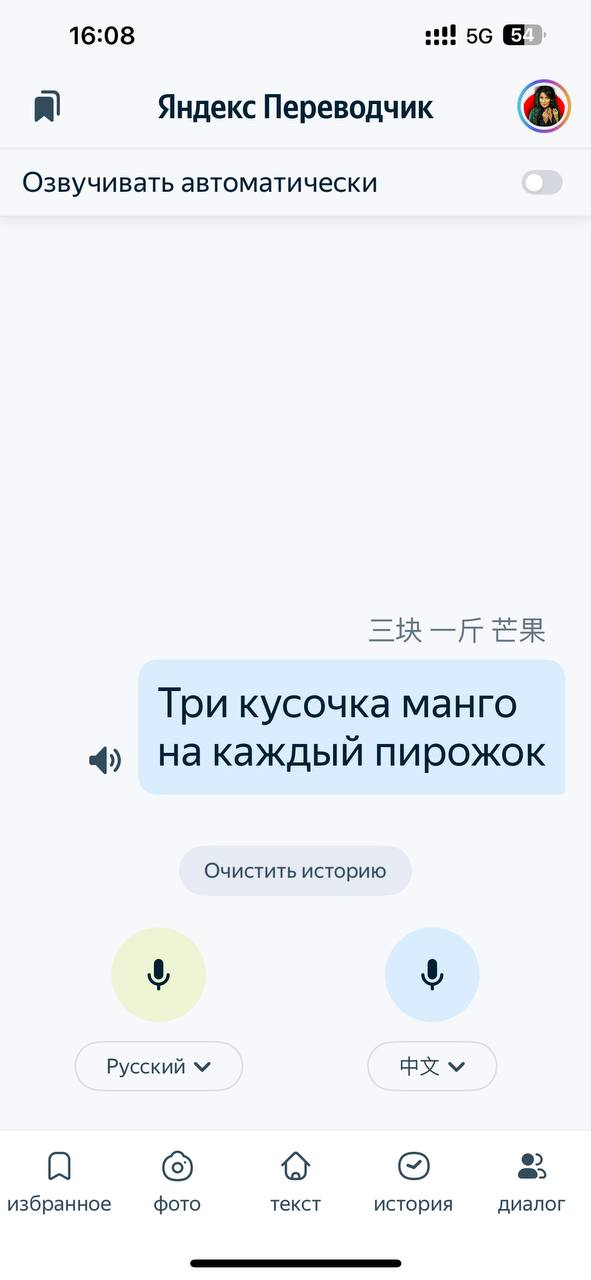
    It answered with total confidence: «Three pieces of mango for each pie.» We laughed. The women at the market laughed even harder. Nobody understood the price, and we walked away with nothing.

    Translator app screenshot translating a mango price as three pieces of mango for each pie
    The famous mango translation. The Chinese meant 3 yuan per jin.

    A few minutes later it clicked: 三块一斤芒果 means «3 yuan for one jin.» A jin is 500 grams, so the mangoes cost 6 yuan a kilo, under a dollar. We turned around and ran back.

    Why DeepSeek works better

    A regular translator only sees one sentence. With DeepSeek you can first set the scene: «I’m a tourist in China, I don’t speak Chinese, and I’m talking to a seller at a market.» Then ask it for a short, natural phrase in Chinese, in large text you can show from your screen, plus a translation back into English so you know what you’re showing.

    The secret isn’t the AI itself, it’s what you tell it: your role, the situation and the format of the answer. If you tell it what you’d tell a friend, it does surprisingly well.

    At the pharmacy

    Asking for a medicine by its brand name from home rarely works in China, because that product often isn’t sold there. We described the symptoms to DeepSeek and asked it to write a request for the pharmacist by active ingredient. DeepSeek only helped explain the problem. The pharmacist chose the medicine, and that’s important: AI doesn’t replace a doctor or a pharmacist.

    Buying a power bank

    We needed a 10,000 mAh power bank. With a phrase from a regular translator, sellers tried to guess what we meant. With DeepSeek’s phrase they nodded straight away and got the right one.

    How to write a translation request in DeepSeek

    First describe the situation in your own words or by voice. Then ask it to:

    • translate into natural Simplified Chinese;
    • keep the phrase short and polite;
    • put the Chinese text in a separate large block;
    • give a back-translation into English;
    • not add any facts you didn’t mention.

    Always read the back-translation before you show the phrase. It takes five seconds and saves you from your own mango story. For prices, ask for the numbers in digits. For an address, paste the Chinese name from your booking.

    Don’t trust any AI for timetables, addresses, ticket prices or rules. Check those in Trip.com, Amap or with a real person.

    Google Translate: keep it as a backup

    A regular translator is still useful for the camera, single words and working offline. Google Translate lets you download languages and translate with the camera. Before the trip, download English and Simplified Chinese and test it at home in airplane mode, not at the departure gate.

    DeepSeek needs a stable internet connection. I used a travel eSIM, and all the apps I needed opened. See best eSIM for China.

    Check the eSIM I used on Trip.com →

    Three situations where you really need a translator

    At a restaurant. Translate the whole menu with the camera first, then zoom in on the dish you picked: a wide shot often garbles small text. If you have an allergy, prepare the Chinese text in advance and ask the staff to confirm it, not just nod.

    In a taxi. The driver needs the name and address in Chinese, not your live translation. Keep short phrases ready: «this entrance,» «stop here,» «wait two minutes.»

    At hotel reception. Show your booking and passport, then show your question as a separate message: late check-in, deposit, breakfast or room type. One message, one question.

    Mistakes that make translation useless

    • Installing the app but forgetting to download offline languages.
    • Writing one long, tangled sentence instead of two short ones.
    • Not checking the back-translation.
    • Trusting the translation of small numbers on a blurry photo.
    • Looking up an address by its English name only.
    • Treating AI as a source of current prices, timetables and rules.

    More apps for the trip: China travel apps.

    FAQ

    What is the best translator app for China?

    In my experience, DeepSeek handles context best. Keep Google Translate for the camera, single words and offline backup.

    Does DeepSeek work in China?

    It worked for me throughout the trip. Install it and sign in before you fly, and save your prompt in a note.

    Does Google Translate work in China?

    Access on local networks can differ. Download languages offline, and use a travel eSIM if you need online features.

    Can I translate a menu without internet?

    Yes, if your app supports offline camera translation and you downloaded the languages in advance. Test it at home in airplane mode.

    Which Chinese should I choose?

    Simplified Chinese for mainland China. Traditional characters are used in Hong Kong, Macau and Taiwan.

    Can I trust DeepSeek when buying medicine?

    Only for translating symptoms and a known active ingredient. A doctor or pharmacist must confirm the medicine and the dose.

  • Taobao for Foreigners: How to Order While Traveling in China

    Taobao for Foreigners: How to Order While Traveling in China

    Short answer: yes, you can use Taobao as a tourist. Register with your foreign phone number, pay through Alipay with your international card, and have the order delivered to your hotel: delivery inside China usually takes one to two days. Search by photo with the camera if you can’t type the item in Chinese, and check the shop’s rating and photo reviews before you pay.

    Checked November 2026. Taobao’s interface and supported languages change; what you see depends on the region set in your app.

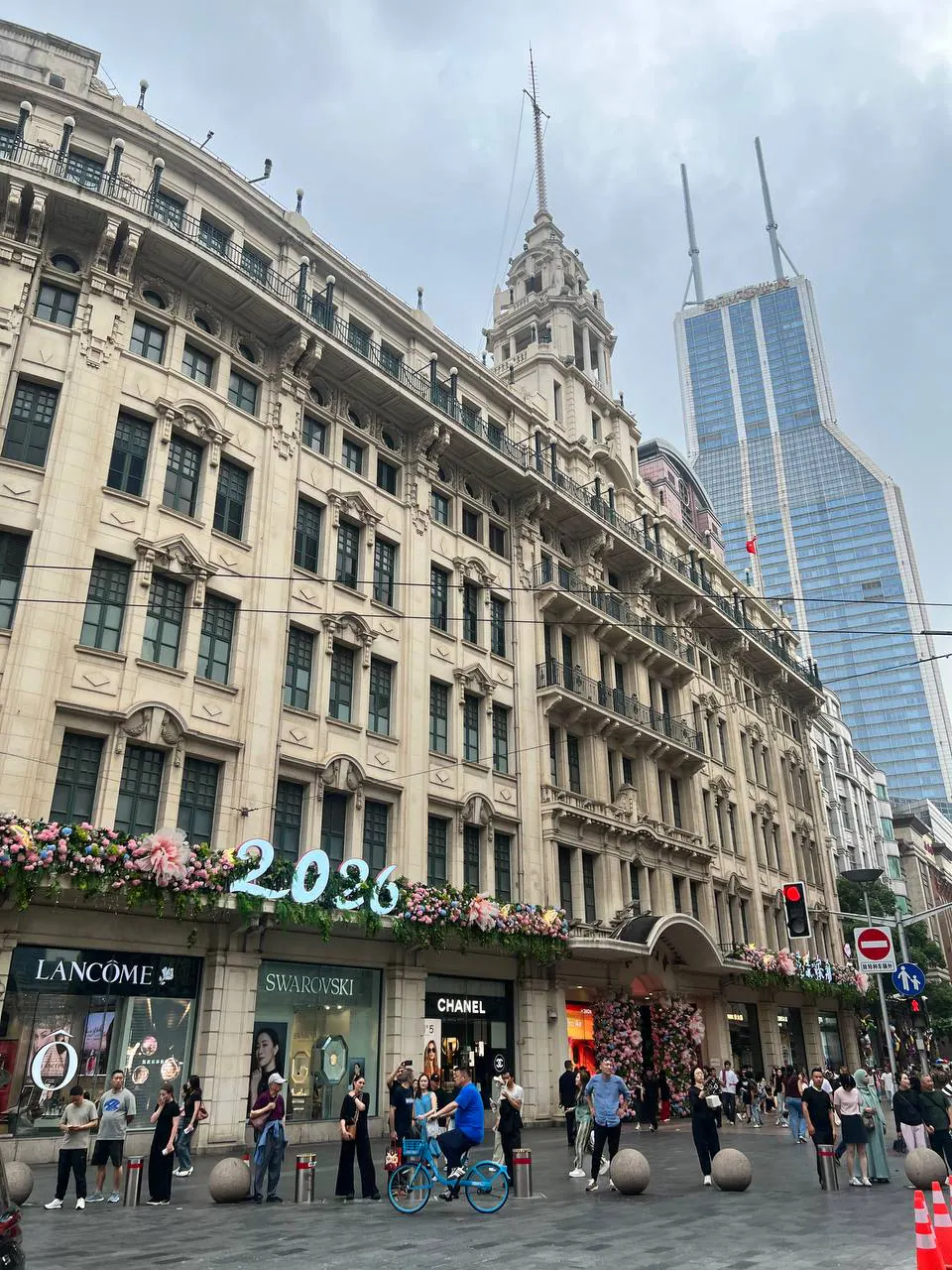
    Nanjing Road in Shanghai during the day
    Shopping streets are fun, but Taobao is often cheaper than malls and tourist shops.

    Can foreigners use Taobao?

    Yes. You don’t need a Chinese ID or a Chinese bank account.

    • Sign-up: with a foreign phone number that can receive SMS, or log in with your Alipay account.
    • Language: Taobao says its English interface is available in more than 17 markets, including Hong Kong, Macau, Singapore, Malaysia, Australia, Canada and the UAE. If your region isn’t on the list, the option won’t appear, and you’ll shop with machine translation and photo search.
    • Payment: through Alipay with a linked Visa, Mastercard or other foreign card. Set Alipay up before the trip: see Alipay for foreigners.

    Taobao vs Tmall

    Inside one app there are really two marketplaces:

    • Taobao (淘宝): millions of small sellers, the lowest prices, and quality you check yourself.
    • Tmall (天猫): brands and big stores selling directly. Slightly more expensive, but less risk of fakes. For a gift or anything where quality matters, look on Tmall first.

    How to search without Chinese

    The easiest way is photo search: tap the camera in the search bar, point it at a similar item or upload a picture, and the app finds lookalikes from different sellers. It works best for things that are easier to show than to describe: a travel organizer, a specific adapter, a phone case of a certain shape.

    The other way is to get the Chinese name of the item from a translator or an AI chat. See my translator app guide.

    How to check a shop before you order

    Before paying, look at three things:

    1. The shop rating.
    2. Reviews with real photos, not just text.
    3. Delivery time.

    Also check how many times this exact item has sold. An item with thousands of orders and real reviews is almost always safer than one a seller just listed. Low rating or no photo reviews? Find the same item from another seller: on Taobao there’s almost always a choice.

    Paying and delivery to your hotel

    Checkout goes through Alipay. According to the Shanghai government’s payment guide, foreign-card payments of 200 yuan or less are generally free, and above that a fee of up to 3% of the full amount may apply. Your bank may add its own foreign transaction fee.

    For the address, use your hotel’s address in Chinese. Take it from your booking or ask at reception. Delivery inside the country usually takes one to two days, so you can order mid-trip if you’re staying in the same city a few more days.

    You can track the parcel in the app, and the courier usually calls or messages before arriving. If you won’t be in, tell reception you’re expecting a parcel in your name. Almost everywhere they’ll accept it and hand it over.

    What if the item doesn’t fit?

    Taobao has a built-in returns and dispute system: if an item doesn’t match the description or arrives damaged, you can open a dispute in the app. For a short trip it’s not always practical, because it takes time and you may have to send the item back at your own cost. It’s easier to choose a shop with a high rating and photo reviews from the start.

    My power bank story

    On my trip we needed three power banks, and we found each one differently. The first came from a supermarket in Hangzhou. For the second we went to a phone shop: they didn’t have the model, but the seller made a call and it was brought to the shop. The third we ordered on Taobao, and that was the calmest way when you know the exact model. Later a friend told me she’d found almost the same one at Miniso for 70 yuan. I’d paid 100.

    What’s worth buying on Taobao as a tourist

    • Small travel things: adapters, organizers, cables.
    • Chinese clothing brands, often cheaper than in malls: Urban Revivo, Peacebird (太平鸟), Bosideng (波司登) for down jackets.
    • Chinese makeup brands with beautiful packaging: Florasis (花西子), Perfect Diary (完美日记).
    • Gifts: tea, phone cases with local motifs, fun stationery.

    Hunting for collectible figures? See buying Labubu and Pop Mart in China.

    FAQ

    Can I use Taobao without speaking Chinese?

    Yes. Use photo search or translate the item’s name. Paying and delivery don’t require chatting with the seller.

    What’s the difference between Taobao and Tmall?

    Taobao is a marketplace of small sellers with low prices. Tmall is for brands and big stores inside the same app: pricier but more reliable.

    How do I pay on Taobao as a foreigner?

    Through Alipay with a linked foreign card.

    How long does Taobao delivery take inside China?

    Usually one to two days.

    Can I deliver a Taobao order to my hotel?

    Yes. Use the hotel’s address in Chinese and tell reception you’re expecting a parcel.

    Can I return an item on Taobao?

    Yes, through the dispute system in the app, but on a short trip it’s easier to buy from a highly rated shop.

  • Buying Labubu and Pop Mart in China: Prices, Stores and Fakes

    Buying Labubu and Pop Mart in China: Prices, Stores and Fakes

    Short answer: in China a regular Pop Mart blind box, Labubu included, costs about 59–99 yuan (about US$9–15) in official stores. On Pop Mart’s own US store, regular figure blind boxes cost US$19.99 and Labubu plush pendant blind boxes US$26.99–36.99 before tax, and resellers charge more. Buy only in Pop Mart flagship stores, Robo Shop vending machines or the official app, and scan the QR code on the box to check it’s genuine.

    Checked November 2026. Prices from my visit to a Pop Mart flagship store in China; new series and collabs can cost more. Exchange rate: 1 US$ = 6.6707 yuan (ECB, 11 November 2026).

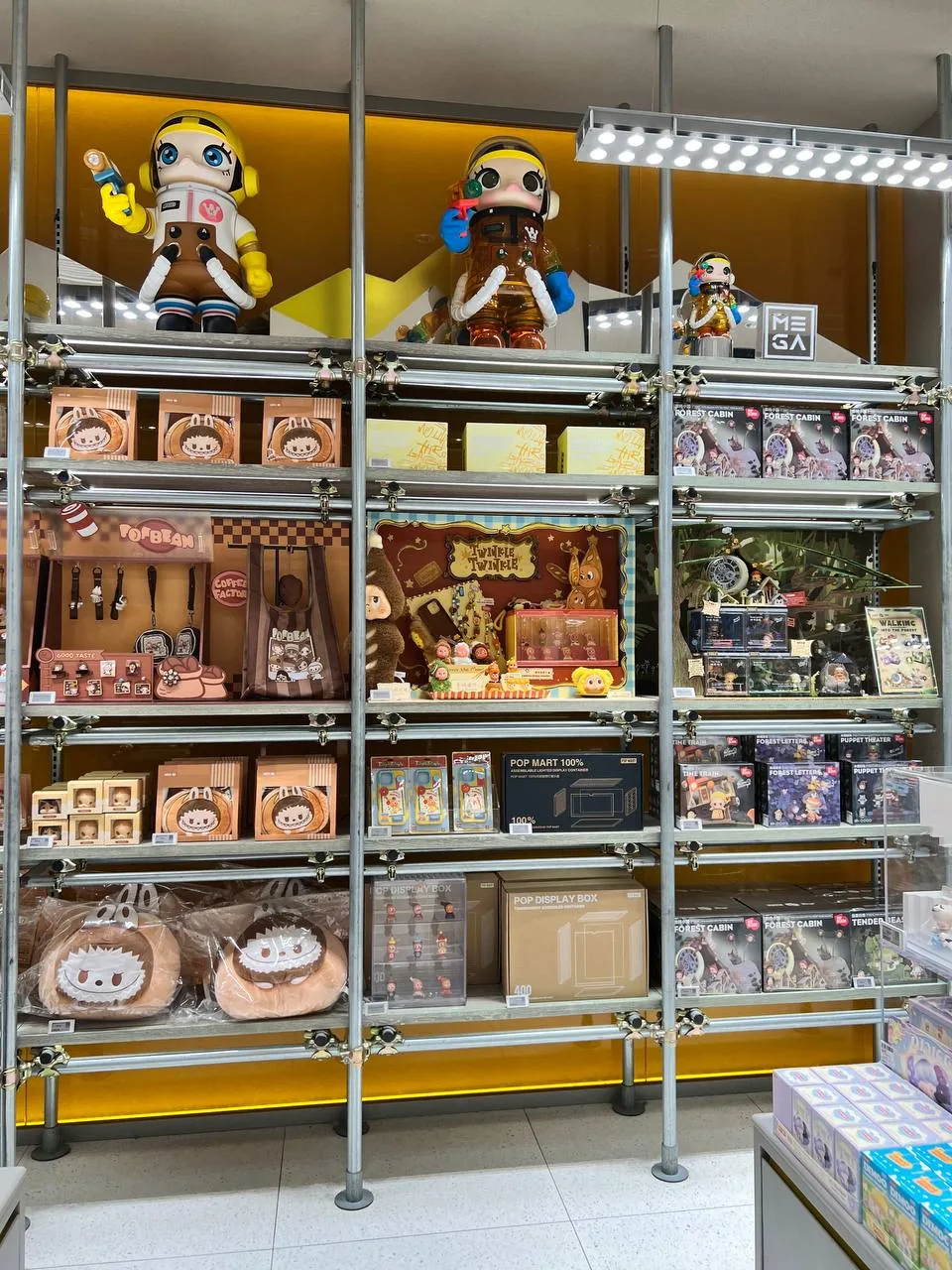
    Shelves in a Pop Mart flagship store with Molly, Dimoo and Forest Cabin sets
    I went in «for five minutes» and came out almost an hour later.

    How Pop Mart blind boxes work

    Pop Mart is a Chinese company that makes collectible vinyl figures sold as blind boxes. You buy a closed box with one figure from a series inside, and you don’t know which one until you open it. The best-known lines are Labubu (The Monsters), Molly, Skullpanda, Dimoo and Crybaby. Each series has a «secret» figure that’s much rarer than the rest, and hunting for it is how one box turns into an evening of boxes.

    Some stores sell full sets with no repeats if you want a complete series without duplicates.

    How much is Labubu in China?

    Where Price per figure
    Pop Mart store in China about 59–99 yuan (US$9–15)
    Pop Mart US online store, figure blind box US$19.99 for most series
    Pop Mart US online store, Labubu plush pendant blind box US$26.99–36.99
    Resellers outside China often more than the official price

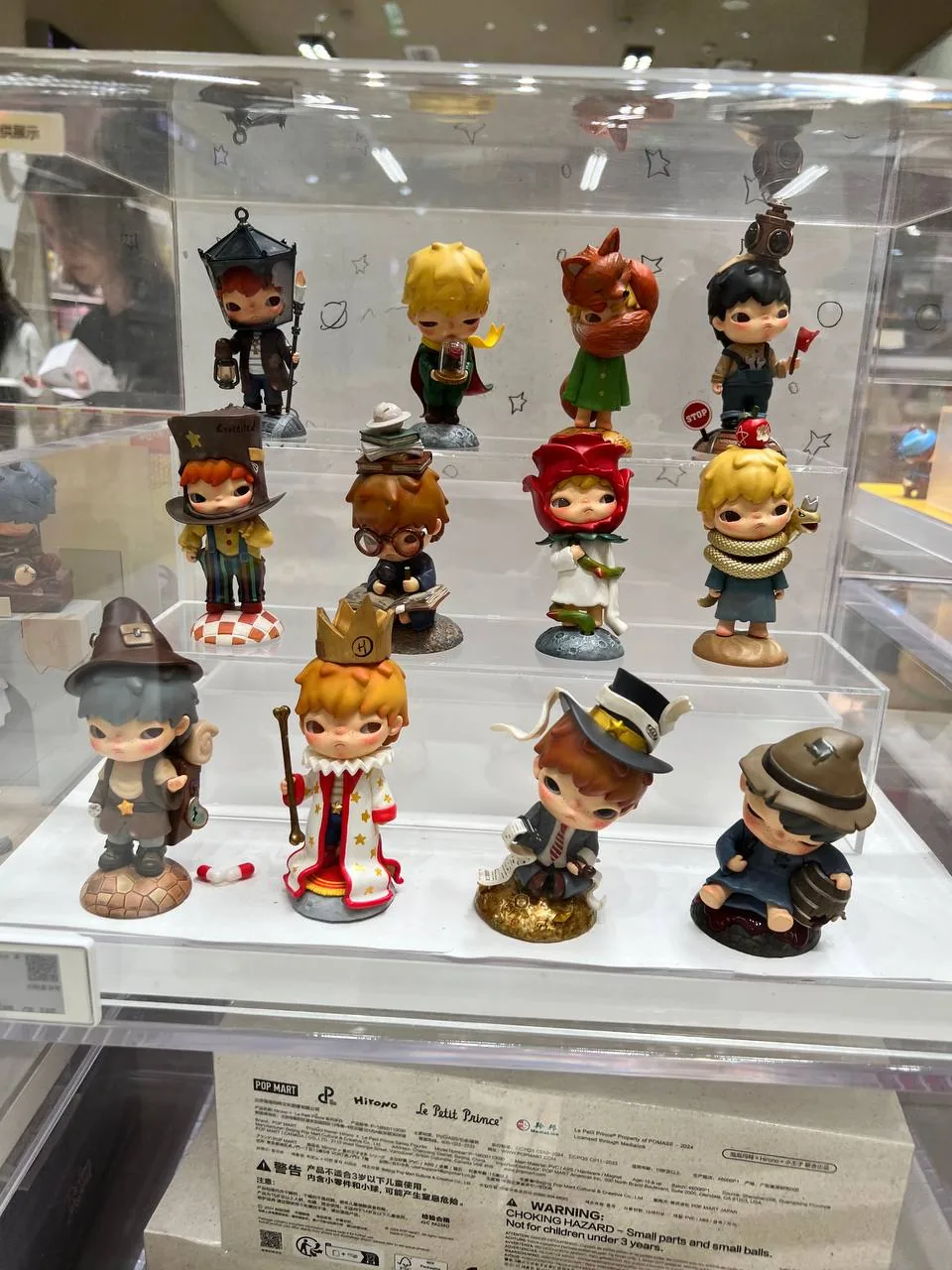
    Limited collabs sell out in the first days and are rarely re-released. In one store I found a whole display of Hirono × The Little Prince figures.

    Display of the Pop Mart Hirono × The Little Prince limited collaboration
    Limited collabs like this one go first.

    Where to buy Pop Mart in China

    Flagship stores

    The safest option. Look for them in big malls in Beijing, Shanghai, Guangzhou, Shenzhen and other large cities, usually on the lower floors of malls like IAPM or SKP. They have the widest choice and new releases. In the biggest ones each franchise has its own floor.

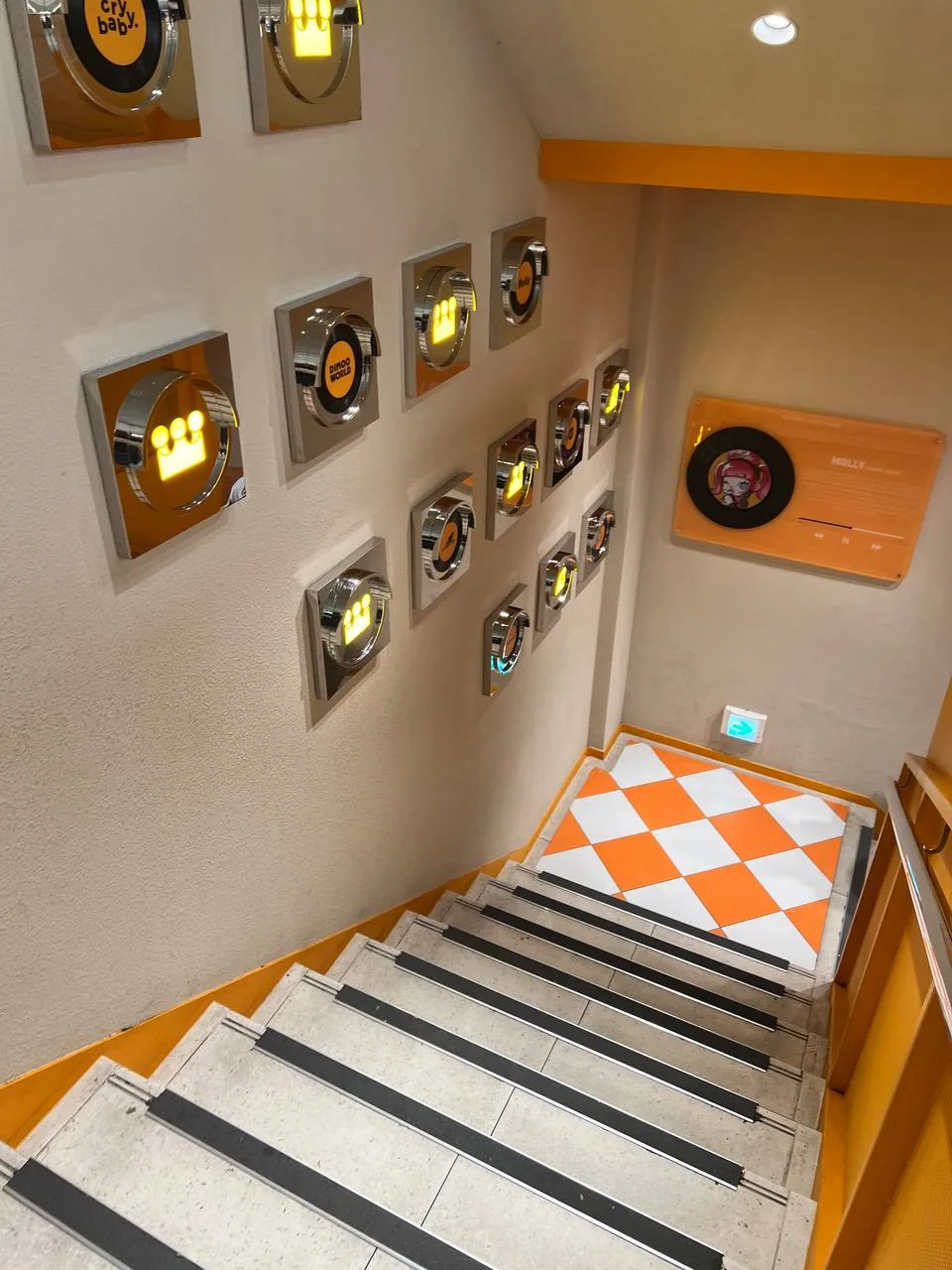
    Staircase inside a Pop Mart flagship store with lit-up Crybaby and Dimoo World logos
    Each floor is a separate world: Crybaby, Dimoo World and the rest.

    Robo Shop vending machines

    Small Pop Mart machines in airports, metro stations and shopping arcades. You pay by QR code with Alipay or WeChat Pay. The choice is smaller, but it’s a good way to spend your last minutes before a flight.

    The official Pop Mart app

    Useful as a stock map: check which stores near you have the series you want. Buying in the app needs a Chinese phone number, so as a tourist, buy in person.

    You don’t need a Chinese number to buy in a store or machine: Alipay or WeChat Pay with a foreign card is enough. See how to pay in China.

    How to avoid fake Labubu

    • Buy only in official places: flagship stores, Robo Shop machines or the app. Fakes are common at markets and small souvenir stalls, and a tourist can’t spot a good one by eye.
    • Scan the QR code on the box in the Pop Mart app to confirm the series is genuine.
    • Watch the price. A figure well under 59 yuan outside an official store is a warning sign.
    • Don’t open the box in the store if you might want to exchange it. Exchanges usually only work for sealed boxes.

    Taking figures home

    The figures are small and light, so a couple of dozen boxes fit in a suitcase. Put them in your carry-on if you’re worried the vinyl might crack. Personal purchases like these usually have no customs limits, but if you’re bringing a large quantity to sell, check the current rules for commercial goods.

    If Pop Mart is sold out, Taobao can be a backup. See Taobao for foreigners.

    FAQ

    Is Labubu cheaper in China?

    Yes. A regular figure in a Pop Mart store in China costs about 59–99 yuan (US$9–15). On Pop Mart’s US store most figure blind boxes cost US$19.99 and Labubu plush pendants US$26.99–36.99.

    Can I choose which figure is in the box?

    No, that’s the point of a blind box. Some stores sell full sets without repeats.

    How do I know my Labubu isn’t fake?

    Buy in official Pop Mart stores, Robo Shop machines or the app, and scan the QR code on the box.

    Do I need a Chinese phone number to buy Pop Mart?

    Not in a store or machine. You only need one to register in the Pop Mart app.

    How do I find a Pop Mart store?

    Use the official app or search «Pop Mart» in your map app. Flagship stores are almost always in big malls.

  • Where to Stay in Beijing: Best Areas for a First Trip

    Where to Stay in Beijing: Best Areas for a First Trip

    Short answer: for a first trip, stay in Dongcheng, around Wangfujing or Qianmen, and make sure your hotel is no more than a 10–15 minute walk from a metro station. Beijing is huge, and a good location saves you more time than an extra star on the hotel. From here the Forbidden City, Tiananmen, Jingshan Park, the hutongs and Shichahai are all close.

    Checked November 2026. Hotel prices and reviews change all the time, so read fresh reviews and check the map before you pay.

    Affiliate disclosure: this article contains affiliate links. If you book through one of them, I earn a small commission at no extra cost to you.

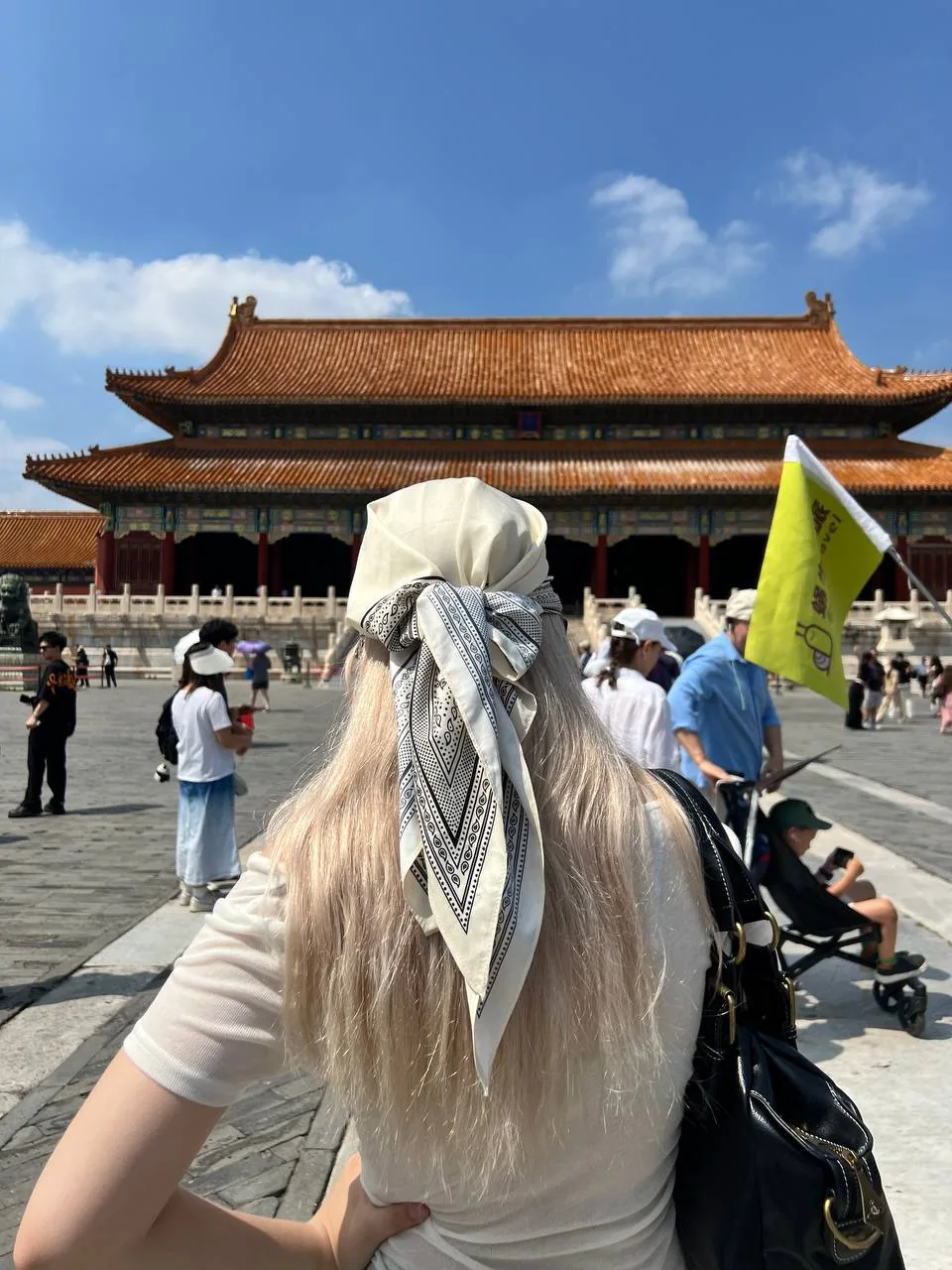
    At the Forbidden City in Beijing
    At the Forbidden City. Pick the area first, then compare rooms.

    Best areas to stay in Beijing

    Area Good for Keep in mind
    Dongcheng / Wangfujing First trip, main sights Central and easy, usually pricier
    Qianmen Old Beijing, hutongs, early start at Tiananmen Choose by distance to the metro, not to the pedestrian street
    Xicheng / Shichahai Atmosphere, lakes, slow walks Check the real walking time to a station
    Chaoyang / Sanlitun Restaurants, bars, shopping, modern Beijing You’ll travel to the historic center

    Dongcheng and Wangfujing: the easiest choice

    Dongcheng is the historic heart of the city. It’s easy to build your days around the Forbidden City, Jingshan Park, temples and the central axis. Wangfujing adds a metro, shops and everything you need nearby.

    Qianmen: for the old city

    Qianmen works if you want to start the morning near Tiananmen Square and walk old streets in the evening. The area name on a booking site doesn’t guarantee much: one hotel can be five minutes from the metro, another much further.

    Xicheng and Shichahai: for atmosphere

    Lakes, hutongs, Beihai Park and a slower pace. A good choice for a second trip, or if you’d rather walk than be as efficient as possible.

    Chaoyang and Sanlitun: modern Beijing

    I go to Sanlitun in the evening for restaurants, Taikoo Li and city life. Staying here suits you if that matters more than early walks around the imperial center.

    Hotels I’d look at

    These are picks from my own Beijing list. They’re not a price promise, so check fresh reviews and the location on the map before you pay.

    • HanTing Hotel (Beijing Wangfujing): a practical central option near Wangfujing.
    • City Line WangFuJing Hotel: a base in Dongcheng close to the central routes.
    • Qianmen Jianguo Hotel: handy for Qianmen and old Beijing.
    • Beijing Qianmen Shàn Hotel: an atmospheric option in the Qianmen hutongs.

    Compare hotels in Beijing on Trip.com →

    What to check before you book

    1. The metro station. Look at the walking route, not the straight-line distance.
    2. Time to your sights. Build two or three routes: the Forbidden City, your train station and where you’ll spend evenings.
    3. Fresh reviews. Especially about noise, smells, windows and the bathroom.
    4. Late check-in. Tell the hotel your arrival time if you land at night.
    5. Payment and deposit. Ask whether you can pay with an international card or Alipay.
    6. The address in Chinese. Save a screenshot for the taxi driver.

    More checks in how to book hotels in China. Before the trip, also set up Alipay and the apps you need.

    Going on to Shanghai? See the Beijing to Shanghai sleeper train and where to stay in Shanghai.

    FAQ

    Where should I stay in Beijing for the first time?

    Dongcheng, Wangfujing or Qianmen, close to a metro station. That makes the main sights easy to reach.

    Should I stay near the airport in Beijing?

    Only for a short layover, a late arrival or a very early flight. Otherwise the daily trip to the center takes too long.

    What matters more in Beijing: the area or the hotel category?

    For a short trip, the area and the metro. A good base gives you more comfort than an extra star far from your route.

  • How Much Does a Trip to China Cost? My 30-Day Budget for Two

    How Much Does a Trip to China Cost? My 30-Day Budget for Two

    Short answer: without flights, our month in China for two people cost about US$1,850–2,160 (about 12,350–14,370 yuan). That’s roughly US$31–36 per person a day for hotels near the metro, two long train rides, food, transport, mobile data and two theme parks. For one person without flights, count on about US$180–240 for a week, US$360–490 for two weeks and US$920–1,080 for a month. Shopping isn’t included.

    Checked November 2026. These are my real costs from a 2026 trip, paid in another currency and converted at the 11 November 2026 exchange rate. Treat them as a guide for a comfortable, not luxury, trip.

    Affiliate disclosure: this article contains affiliate links. If you book through one of them, I earn a small commission at no extra cost to you.

    Our China trip budget: 30 days, 2 people, 4 cities

    Category For two, 30 days In yuan Notes
    Hotels about US$850 about 5,650 30 nights in four cities, about US$28 a night
    Trains about US$205 about 1,370 Hangzhou–Shanghai high-speed train and a night train from Shanghai to Beijing
    Taxis about US$36 about 240 for the whole month
    Metro about US$24–36 about 160–240 our main transport
    Food about US$435–725 about 2,900–4,850 breakfast included at hotels
    Mobile data (eSIM) about US$36 about 240 for the month
    Attractions about US$265 about 1,780 including Shanghai Disneyland and Universal Beijing
    Total without flights about US$1,850–2,160 about 12,350–14,370

    Flights aren’t in the table because they depend completely on where you fly from.

    Hotels: about US$28 a night

    That’s not because we stayed anywhere. I check the district, the walking time to the metro, recent reviews and the exact room type. In China it’s easy to book a room without a window by accident. I explain how I check all of this in how to book hotels in China.

    Compare hotels in China on Trip.com →

    Trains: two long rides

    The high-speed train from Hangzhou to Shanghai cost about US$24 for two. The night train from Shanghai to Beijing cost about US$180 for two berths, upper and lower, in a soft-sleeper compartment. It looks expensive until you remember it replaces a flight and a hotel night. Details in my Beijing to Shanghai sleeper train guide.

    Metro and taxis: about US$60–70 for the month

    We used the metro almost everywhere and paid with the transport QR code in Alipay. Taxis came to about US$36 for the whole month. We ordered them through DiDi inside Alipay and picked the address on the map instead of reading the hotel name to the driver. See how to pay in China.

    Food: the biggest range

    A normal meal cost us about 25–40 yuan per person. Restaurants started at about 80 yuan. The full breakdown, including milk tea and bakeries, is in how much food costs in China.

    Attractions: theme parks change the math

    Walking along waterfronts, parks and old streets costs almost nothing. Shanghai Disneyland and Universal Beijing are a different story: they took most of the attractions budget. If they’re on your list, give them their own line. See Shanghai Disneyland tickets and hotels.

    The Universal globe at Universal Beijing Resort
    Universal Beijing: not the budget part of the trip.

    Mobile data: about US$36 for a month

    A travel eSIM covered the whole month. See best eSIM for China.

    Shopping: not in the budget

    Taobao orders would have added about US$360–600. At some point we had to buy a new suitcase. I don’t count shopping as travel cost: one person leaves with a magnet, another with a new wardrobe. If you plan to shop, read Taobao for foreigners.

    How much to budget for 7, 14 and 30 days

    Trip length Per person, without flights For two, without flights
    7 days about US$180–240 (1,200–1,600 yuan) about US$360–490
    14 days about US$360–490 (2,400–3,200 yuan) about US$730–970
    30 days about US$920–1,080 (6,100–7,200 yuan) about US$1,850–2,160

    For a short trip, find flights and hotels first, then add the daily budget and any theme parks. For higher-category hotels, more taxis and restaurants, I’d add at least 30–50%.

    How to spend less

    • Stay near the metro and use it instead of taxis.
    • Eat in small local cafés.
    • Book trains and tickets early.
    • Stay away from Taobao. That’s the hardest one.

    FAQ

    How much does a trip to China cost per day?

    On my trip it came to about US$31–36 per person a day without flights, for comfortable hotels, food, transport and two theme parks.

    How much is a week in China?

    About US$180–240 per person without flights, at our level of comfort. Add flights and any theme parks.

    Is China expensive for tourists?

    Day-to-day costs are moderate. Theme parks, taxis on long distances and shopping are what push the budget up.

  • Beijing to Shanghai Sleeper Train: Is the Night Train Worth It?

    Beijing to Shanghai Sleeper Train: Is the Night Train Worth It?

    Short answer: yes, if you want to save a day. A daytime G high-speed train takes about 4.5–6 hours. A night train takes about 10–12 hours, but you sleep through it and wake up in the other city, which also saves a hotel night. Night trains run in both directions. I took the night train from Shanghai to Beijing and paid about US$180 for two berths, one upper and one lower, in a soft-sleeper compartment. For a first night train, book a soft sleeper (软卧), not a hard sleeper (硬卧).

    Checked November 2026. Train times from my trip, re-checked 21 October 2026. Schedules and fares change, so check the current timetable before you book. Price converted at the 11 November 2026 exchange rate.

    Affiliate disclosure: this article contains affiliate links. If you book through one of them, I earn a small commission at no extra cost to you.

    High-speed train or night train?

    G high-speed train (day) Night train
    Travel time about 4.5–6 hours about 10–12 hours
    Usual stations Beijing South ↔ Shanghai Hongqiao check your ticket
    Seats second class, first class, business soft sleeper or hard sleeper
    Hotel night you still need one saved
    Best for almost everyone saving a full sightseeing day

    The flight looks faster on paper. Once you add the trip to the airport, security and baggage claim, the real time saving is close to zero.

    Both cities have several stations. «Beijing» or «Shanghai» on a ticket doesn’t tell you which one, so check the station name in Chinese and English before you go.

    Soft sleeper vs hard sleeper

    • Soft sleeper (软卧, ruǎnwò): a closed compartment for four with a door. This is what I booked.
    • Hard sleeper (硬卧, yìngwò): an open carriage with three-tier bunks and no door. Cheaper, but noisier. If you book it, take the lower bunk.

    The price difference isn’t big, and for a first night train in China the closed compartment is worth it.

    How much does the night train cost?

    Our two berths in a soft-sleeper compartment, one upper and one lower, cost about 1,210 yuan (about US$180) together, converted at today’s rate. Other passengers can take the remaining two berths. Fares depend on the train and the class. When I compare it with flying, I subtract the hotel night I don’t need: after that the train often comes out cheaper than it looks.

    How to book

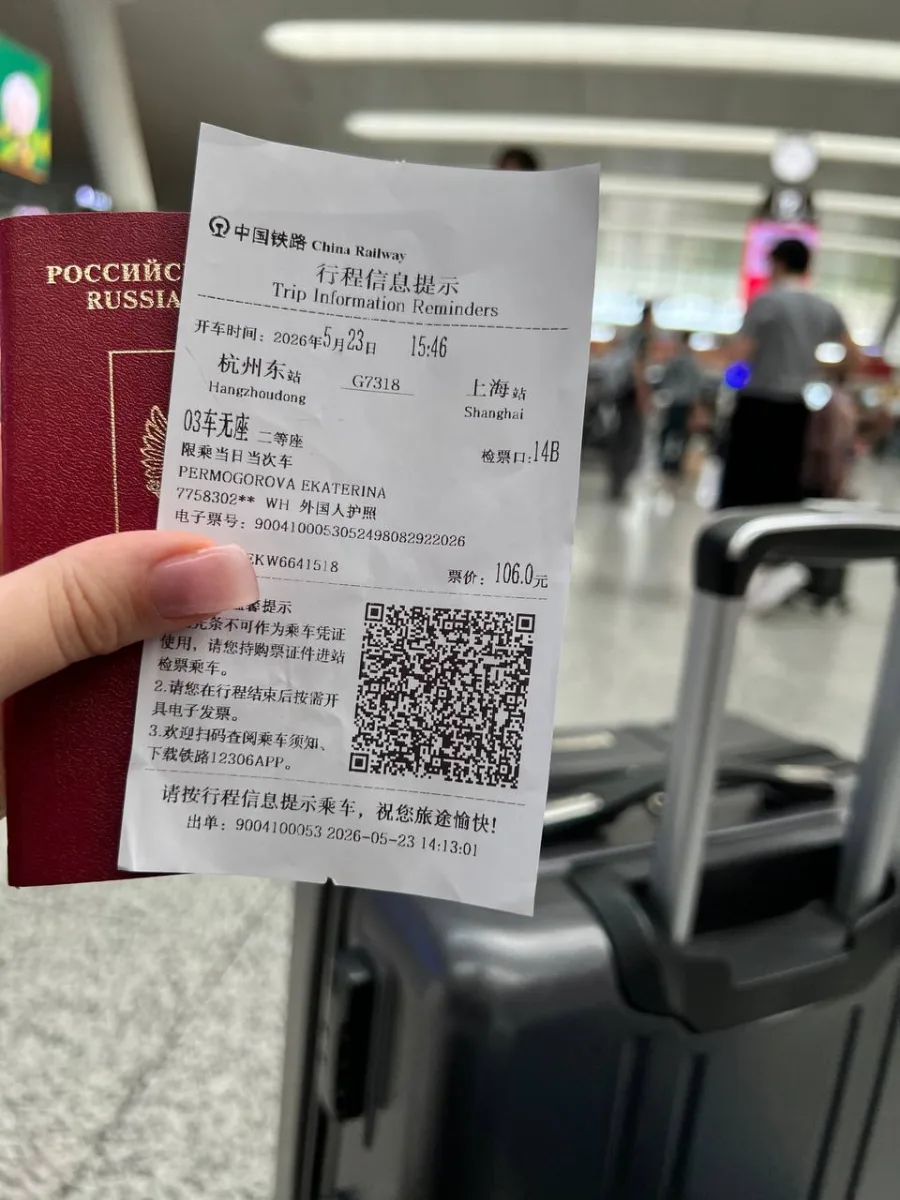
    Book on Trip.com in English with a foreign card, or in the official 12306 app. Tickets are linked to your passport, there’s no paper ticket. For night trains, book several weeks ahead: on popular dates the good compartments sell out first.

    Search Beijing to Shanghai trains on Trip.com →

    A Chinese railway ticket for a night train
    Your passport is your ticket. Keep it in your hand at the gate.

    At the station

    1. Arrive 45–60 minutes before departure. There’s a passport check and a security check at the entrance.
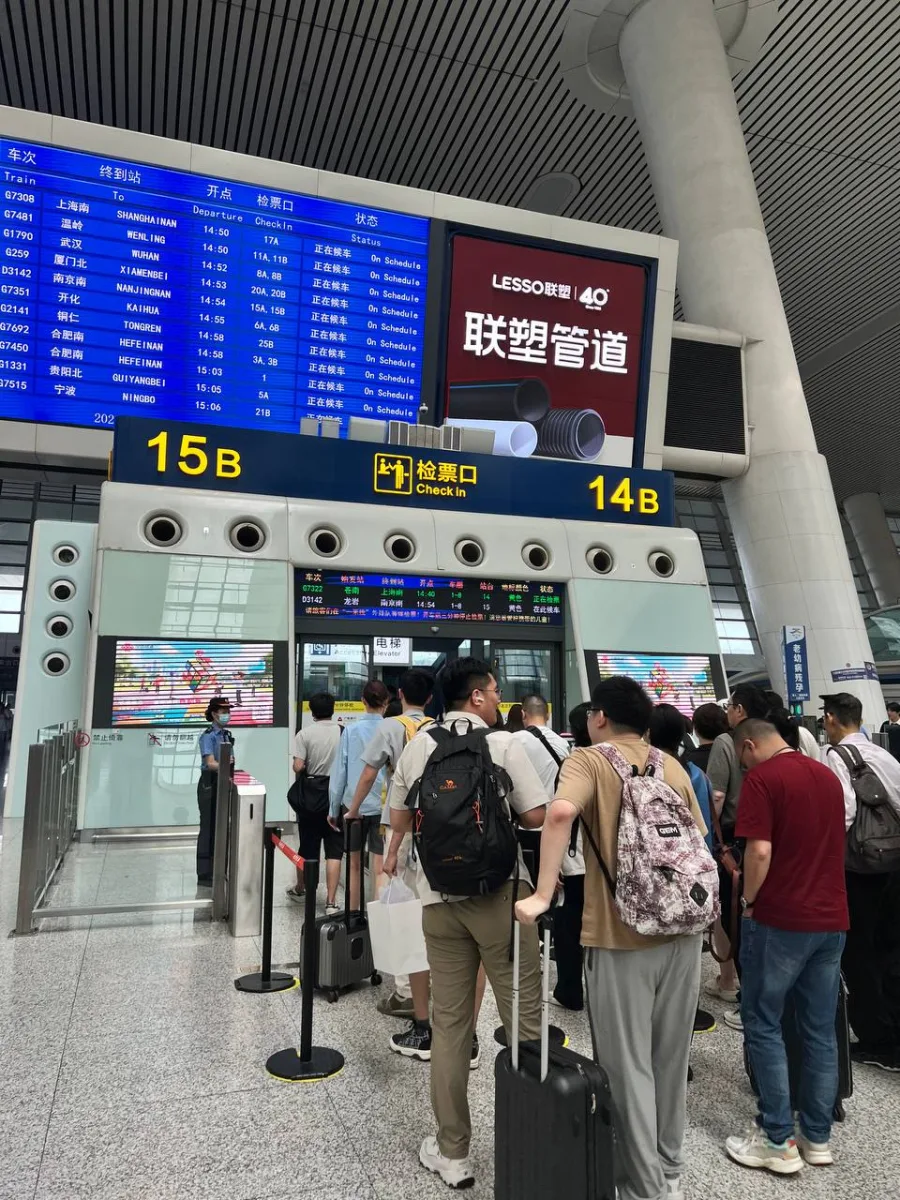
    2. Find your gate number on the departure boards.
    3. The gate opens about 15–20 minutes before departure. Scan your passport and walk to your carriage.
    Boarding gates at a Chinese railway station
    The gate opens 15–20 minutes before departure.

    What to bring

    • Light clothes to sleep in. Compartments are often warm.
    • Water and snacks.
    • A charged power bank.
    • Your hotel address in Chinese for the taxi in the morning.

    Where to stay at each end: where to stay in Beijing and where to stay in Shanghai.

    FAQ

    How long is the night train from Beijing to Shanghai?

    About 10–12 hours. The G high-speed train takes about 4.5–6 hours.

    Night train or flight between Beijing and Shanghai?

    The night train saves a day and a hotel night. Door to door, a flight saves little time.

    Which sleeper class should I book?

    For a first trip, a soft sleeper (软卧): a closed compartment for four. A hard sleeper (硬卧) is cheaper but open.

    How early should I book?

    Several weeks ahead for popular dates.

  • Shanghai Disneyland Tickets and Hotels: Prices, Metro and Tips

    Shanghai Disneyland Tickets and Hotels: Prices, Metro and Tips

    Short answer: a one-day ticket to Shanghai Disneyland started at about 475 yuan (about US$71) when I last checked, and the price depends on the date. Buy through the official Shanghai Disney Resort app or website, or through Trip.com, and bring the original passport you booked with. The park is at the end of Metro Line 11 (Disney Resort station). With a ticket, metro, food and one souvenir, plan on about 650–800 yuan (US$97–120) per person for the day.

    Checked November 2026. Ticket prices from my visit, re-checked 21 October 2026; confirm today’s price on the official site before you buy. Exchange rate: 1 US$ = 6.6707 yuan (ECB, 11 November 2026).

    Affiliate disclosure: this article contains affiliate links. If you book through one of them, I earn a small commission at no extra cost to you.

    Holding Shanghai Disneyland tickets at the park entrance
    Tickets in hand at the entrance. Keep the passport you booked with in the same pocket.

    Shanghai Disneyland ticket prices

    What Cost per person In US$
    One-day ticket from about 475 yuan, depends on the date from about $71
    Premier Access (skip-the-line for one ride or show) sold separately in the app varies
    Metro to the park and back about 12–20 yuan about $2–3
    Food and drinks inside the park about 150–300 yuan about $22–45
    Total for the day about 650–800 yuan about $97–120

    Tickets are dated and tied to your passport. Weekends, Chinese public holidays and school breaks cost more, so check the calendar before you fix your Shanghai dates.

    Check Shanghai Disneyland tickets on Trip.com →

    The resort changed its ticket refund and exchange policy from 12 January 2026. Read the current rules on the official site before you pay, especially if your dates might move.

    How to get to Shanghai Disneyland

    Take Metro Line 11 to Disney Resort station, the last stop on that branch. Use exit 1 or 4 and follow the signs, it’s a short walk to the gates. From People’s Square, count on about an hour.

    Arrive 45–60 minutes before opening. Security and passport checks take time, and the first hour is the quietest time for the big rides.

    What to do first

    Rides worth heading to first: Zootopia, TRON Lightcycle Power Run and Pirates of the Caribbean: Battle for the Sunken Treasure. Head to one of them as soon as you’re in, then use the official app for wait times. Stay for ILLUMINATE! A Nighttime Celebration at the castle.

    Enchanted Storybook Castle at Shanghai Disneyland
    The castle. Find a spot for the evening show early.
    TRON Lightcycle Power Run building at Shanghai Disneyland
    TRON: one of the rides to do first.

    Hotels near Shanghai Disneyland

    If you want an early start or plan two days, stay near the park.

    Hotel Why stay here
    Shanghai Disneyland Hotel Official resort hotel, the most expensive option
    Shanghai Toy Story Hotel Official resort hotel, cheaper than the Disneyland Hotel
    Novotel Shanghai Clover About 500 m from Kangxin Highway station on Line 11
    Meliá Shanghai Parkside Close to the resort area
    Courtyard by Marriott Familiar international brand near the park

    Note: the Wishing Star Ferry between the Shanghai Disneyland Hotel and the park is closed from 4 to 30 November 2026. A free shuttle runs instead, according to the resort.

    For one day at the park, staying in the city is fine. See where to stay in Shanghai.

    Practical tips

    • Bring the original passport you used for the ticket.
    • Install the official Shanghai Disney Resort app at home and check it works on your eSIM.
    • Set up mobile payment before your visit; see Alipay for foreigners.
    • Food inside is pricier than in the city, so budget 150–300 yuan.

    FAQ

    How much is a Shanghai Disneyland ticket?

    A one-day ticket started at about 475 yuan (about US$71) when I checked. Price depends on the date.

    How do I get to Shanghai Disneyland by metro?

    Take Line 11 to Disney Resort station and use exit 1 or 4.

    Do I need my passport at Shanghai Disneyland?

    Yes. Bring the original passport you booked the ticket with.

    How much money do I need for a day at Shanghai Disneyland?

    About 650–800 yuan (US$97–120) per person including ticket, metro and food.

  • iPhone Price in China 2026: Is It Cheaper Than in the US?

    Short answer: no. On 11 November 2026, Apple’s China store listed the iPhone 17 from 6,799 yuan, which is about US$1,019. The same model starts at US$899 on Apple’s US site before sales tax. Even after China’s departure tax refund of roughly 9%, a new iPhone in mainland China rarely beats US prices. There’s also an eSIM trap: most iPhones sold in mainland China use two physical SIM cards.

    Checked 11 November 2026 on apple.com.cn and apple.com. Prices are starting prices for the base storage; compare the same storage before you decide. Exchange rate: 1 US$ = 6.6707 yuan (ECB, 11 November 2026).

    iPhone prices: China vs US

    Model China (apple.com.cn, VAT included) In US$ US (apple.com, before sales tax)
    iPhone 17e from 5,299 yuan about $794 from $699
    iPhone 17 from 6,799 yuan about $1,019 from $899
    iPhone Air from 8,799 yuan about $1,319 from $1,099
    iPhone 18 Pro from 9,999 yuan about $1,499 from $1,199

    The Chinese price already includes 13% VAT. US prices don’t include sales tax, which depends on the state. Even so, the gap is large enough that China only works out if your home country has high taxes on electronics.

    The tax refund: about 9% back, with conditions

    Foreign visitors can claim a departure tax refund on goods bought in stores that take part in the scheme. According to China’s State Council and the Shanghai government guide:

    • Spend at least 200 yuan in one store on the same day.
    • Ask the store for the tax refund application form and the special invoice.
    • Leave China within 90 days of purchase, and within 183 days of entry.
    • Keep the goods unused and show them at the refund counter at departure.
    • The refund rate is 11% for goods with 13% VAT, minus a 2% service fee. So you get back roughly 9%.
    • Cash refunds go up to 20,000 yuan; above that the refund goes to a bank card.

    With the refund, an iPhone 17 at 6,799 yuan costs about 6,190 yuan, or about US$927. That’s still more than the US$899 sticker price. For the iPhone 18 Pro the gap stays at about US$165.

    Check before you buy that the specific Apple Store or reseller is in the departure tax refund scheme. Don’t assume it.

    The eSIM trap: mainland China iPhones

    Most iPhones sold in mainland China don’t support eSIM and take two physical nano-SIM cards instead. According to Apple, only the models listed as eSIM-capable for mainland China (the iPhone 18 Pro, 18 Pro Max, Air and 17e at the time of writing) support it there. Some models sold in Hong Kong and Macau also use dual nano-SIM.

    If you rely on a travel eSIM, check the exact model number and the SIM section on Apple’s China specs page before you pay. My guide to the best eSIM for China explains why that matters on a trip.

    Other things to check before buying an iPhone in China

    • Software features. Some features work differently on devices bought in mainland China. Check Apple’s feature availability page for the ones you care about.
    • Warranty. Apple’s standard warranty applies, but check the terms for your home country.
    • Payment. Check the payment options in the store before you go. See how to pay in China.

    If you still want to look, the Apple Store on Nanjing East Road in Shanghai (300 Nanjing East Road) is easy to reach.

    So, should you buy an iPhone in China?

    Only if you find a promotion, your home prices are much higher than in the US, and you’ve checked the SIM type. For most travelers, a phone case, accessories or a power bank from a local store are the better souvenir.

    FAQ

    Is the iPhone cheaper in China?

    Not usually. On 11 November 2026 the iPhone 17 started at 6,799 yuan in China (about US$1,019) and at US$899 in the US before tax.

    Can foreigners get a tax refund on an iPhone in China?

    Yes, in stores that take part in the departure tax refund scheme. Spend at least 200 yuan in one store on one day, keep the phone unused and leave within 90 days. You get back about 9%.

    Does an iPhone from China support eSIM?

    Only some models. Most iPhones sold in mainland China use two physical SIM cards. Check Apple’s China specs page for the exact model.

    Will an iPhone from China work in other countries?

    Check the network bands and SIM type for your carrier on Apple’s specs page before buying.

  • How Much Does Food Cost in China? Real Prices From My Trip

    How Much Does Food Cost in China? Real Prices From My Trip

    Short answer: in big Chinese cities a simple meal costs about 25–40 yuan (US$3.50–6) per person, and a sit-down restaurant starts at about 80 yuan (US$12). With breakfast included at the hotel, I spent roughly 65–115 yuan (US$10–17) per person a day on food. Milk tea is cheap, bakeries are not, and fruit at local markets costs almost nothing.

    Checked November 2026. My prices come from my own trip. Yuan and dollar amounts are converted at the 11 November 2026 exchange rate, so treat them as a guide, not a menu.

    Chinese bakery pastries on a tray
    Bakeries were the one place where food in China felt expensive.

    Food prices in China at a glance

    What Price per person In US$
    Simple meal (noodles, dumplings, rice set) about 25–40 yuan about $3.50–6
    Sit-down restaurant from about 80 yuan from about $12
    Mixue drink or ice cream about 6–12 yuan about $0.85–1.80
    Molly Tea (茉莉奶白) milk tea about 15–16 yuan about $2.20–2.40
    Bakery run (a few pastries) about 20–50 yuan about $3–7
    Mango at a local market in Hainan 3 yuan per jin (6 yuan per kg) about $0.90 per kg
    All food for one day, hotel breakfast included about 65–115 yuan about $10–17

    A week of food for two people cost us about 1,320 yuan (about US$200) in total. That was a normal mix of quick meals, a few restaurants, drinks and snacks, not a strict budget.

    Everyday meals: cheaper than you expect

    Local canteens, noodle shops and food courts in malls are where your money goes furthest. A filling bowl or a rice set lands in the 25–40 yuan range. You order from a picture menu or a QR code on the table and pay with Alipay or WeChat Pay.

    Restaurants with table service start at about 80 yuan per person. Hot pot, Peking duck and anything in a tourist street costs more. If you want to see what a dish is before you order, point your phone camera at the menu. I explain how I do that in my translator app guide.

    Drinks: milk tea for the price of a bottle of water

    Tea and ice cream chains are everywhere. Mixue is the cheapest: a drink or a cone costs about 6–12 yuan. Molly Tea and similar milk-tea brands cost about 15–16 yuan. For a hot day in Shanghai or Sanya, that’s the cheapest way to cool down.

    Bakeries: the one place I overspent

    Chinese bakeries look irresistible, and a tray of a few pastries quickly reaches 20–50 yuan. It’s not a disaster, but it’s the one category where China didn’t feel cheap.

    Fruit and markets: the best value in the country

    At a local market in Hainan we paid 3 yuan per jin for mangoes. A jin (斤) is 500 grams, so that’s 6 yuan per kilogram, less than a dollar. Prices at markets are almost always given per jin, not per kilo, so halve the weight in your head.

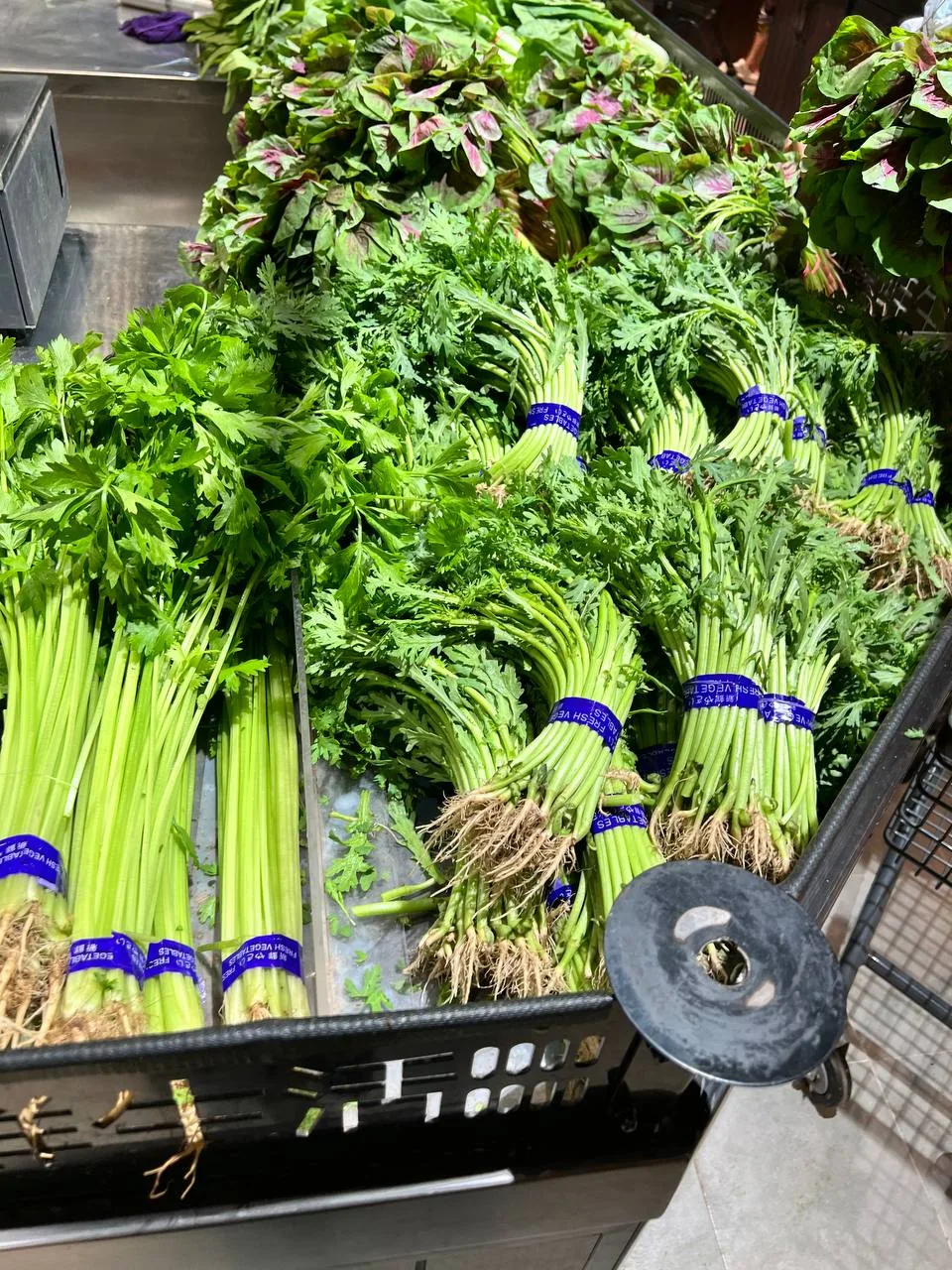
    Vegetables and fruit on a local market stall in China
    Local markets price everything per jin, which is half a kilogram.

    Snacks: look for HotMaxx

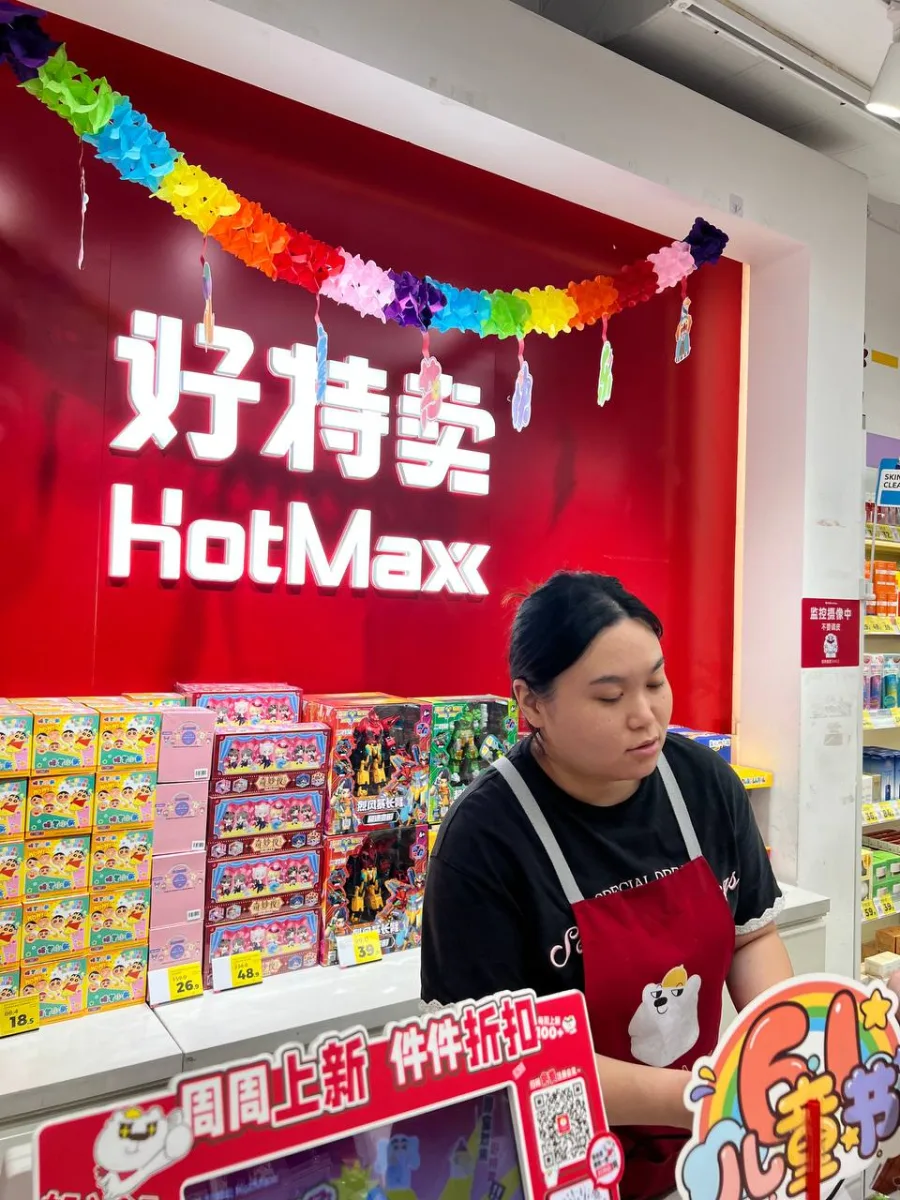
    For water, snacks and road-trip supplies, discount snack stores like HotMaxx (好特卖) are cheaper than convenience stores. It’s a good place to stock up before a long train ride.

    Shelves with snacks and drinks in a HotMaxx discount store in China
    HotMaxx: snacks and drinks for the train for less than at a convenience store.

    How to budget for food in China

    1. Count about 65–115 yuan (US$10–17) per person per day if breakfast is included at your hotel.
    2. If breakfast isn’t included, add the price of one simple meal.
    3. Add a 20% buffer for theme parks, airports and tourist streets, where prices jump.
    4. Set up a mobile payment app before you fly. Cash still works, but almost everyone pays by QR code. See how to pay in China.

    If you’re planning the whole trip, my China trip cost breakdown puts food next to hotels, trains and tickets.

    FAQ

    How much is a meal in China?

    A simple meal in a city costs about 25–40 yuan (US$3.50–6) per person. A sit-down restaurant starts at about 80 yuan (US$12).

    How much should I budget for food per day in China?

    On my trip it was about 65–115 yuan (US$10–17) per person a day with hotel breakfast included. Add 20% as a buffer.

    Is food in China cheap for tourists?

    Everyday meals, milk tea and market fruit are cheap. Bakeries, theme parks and tourist streets cost noticeably more.

    What is a jin?

    A Chinese unit of weight equal to 500 grams. Markets usually show prices per jin.